
Good safari wildlife viewing etiquette means giving animals space, following your guide’s instructions and sharing sightings considerately. The aim is to watch wildlife without crowding it, changing its behaviour or putting a photograph ahead of safety.
Across East Africa, you may watch animals from a vehicle, a boat or on a guided walk. Each setting calls for different precautions. Local rules and your guide’s briefing always take priority over general advice.
Prepare for patient, considerate wildlife viewing
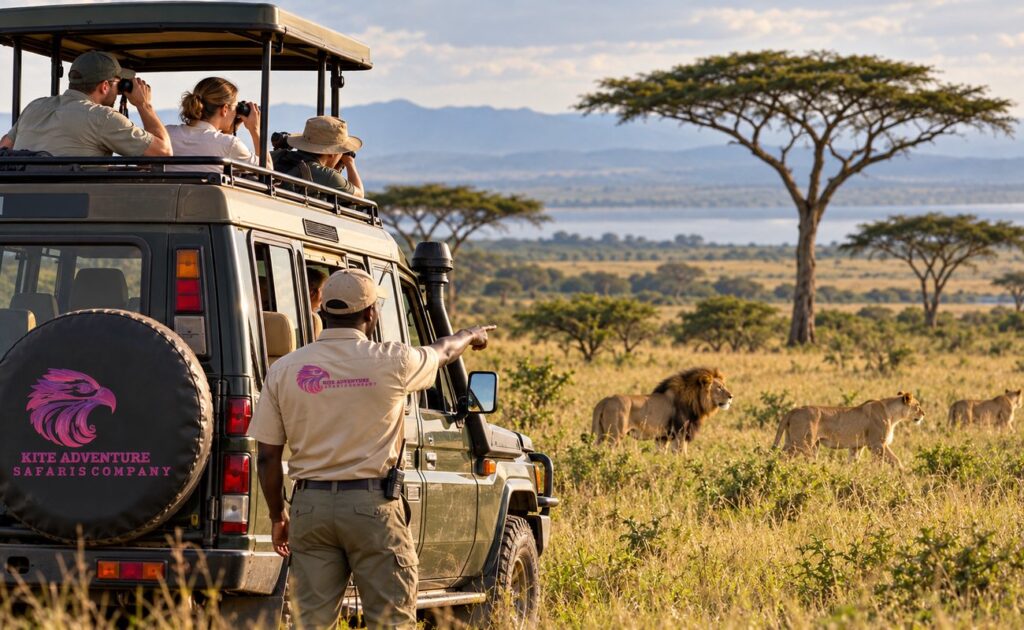
A safari is not a performance with predictable positions and timing. Animals may remain partly hidden, turn away or move out of view. Accepting those limits takes pressure off wildlife, guides and fellow travellers.
Before travelling, discuss the experiences that matter most to you. If photography is a priority, raise your equipment and viewing needs in advance rather than expecting changes during a sighting.
If you are travelling with children, explain that speaking softly, staying in the permitted space and watching patiently are part of the activity. Agree on a simple way to share a sighting, such as quietly telling an adult first.
Follow your guide and confirm the local rules
Listen to the briefing even if you have been on safari before. Instructions for a game drive should not be assumed to apply to a primate trek, boat outing or guided walk.
Before setting off, clarify:
- Where you may sit, stand or move during the activity.
- When, if ever, you may leave the vehicle or boat.
- Which viewing distances and time limits apply.
- Whether flash, additional lighting, sound playback or drones are restricted.
- What to do if wildlife approaches.
If your guide asks you to sit down, keep still or stop taking photographs, respond promptly. The reason may not be obvious from your position. Save questions for a suitable moment rather than delaying an instruction during an encounter.
Do not pressure a guide to break a rule because another vehicle appears to be doing so. If a suggestion seems unsafe or conflicts with the briefing, raise your concern calmly and ask for clarification.
Give wildlife space and leave its route clear
Distance is not a failure of the safari. Binoculars and a suitable camera lens help you appreciate details without moving closer. A wider view can be just as rewarding: an animal resting in shade, moving through grass or travelling with its group.
Never ask for wildlife to be surrounded, followed closely or cut off from its route. If an animal is moving towards a road or water, leave positioning decisions to the guide rather than urging a move into its path.
What to do if an animal comes closer
An approaching animal is not an invitation to interact. Do not reach out, call to it, lean towards it or try to create a selfie opportunity. Keep your body and equipment within the permitted viewing space and follow the guide’s directions.
Apparent calm does not mean an animal is safe to approach. You do not need to judge whether it seems friendly; respect the boundaries set for the activity.
Never feed, lure or touch wildlife
Keep food secure and take all litter away, including fruit peel and other food scraps. Do not offer food, leave it out for a photograph or make noises to draw an animal closer. Touching or handling wildlife is not part of respectful observation.
If you drop something near an animal, tell the guide. Do not climb out or reach into an unsafe position to retrieve it yourself.
Keep noise and distractions down
Excitement is natural when you spot something unexpected. Point it out quietly and let the guide help others find it. Shouting across a vehicle or repeatedly calling to an animal adds disturbance without improving the view.
- Silence phone notifications before the activity and save calls for an appropriate stop.
- Do not play music, videos or recorded animal calls at sightings.
- For birdwatching, confirm the local policy on sound playback rather than assuming it is allowed.
- Organise bags and equipment so you can reach binoculars without prolonged rummaging.
- Avoid sudden movements when the guide has asked the group to remain still.
Take photographs without putting the shot first
A photograph should not depend on changing an animal’s behaviour. Do not whistle for a head turn, clap for attention or ask someone to flush a bird from cover. If the subject stays hidden or faces away, work with the scene or enjoy watching without taking a picture.
Prepare your camera before reaching a sighting where practical. Check settings, secure straps and keep equipment from swinging into another passenger’s space. Turn off unnecessary camera sounds and confirm the rules on flash and additional lighting.
- Use distance creatively. Include the surrounding landscape instead of always seeking a tight portrait.
- Keep equipment contained. Do not extend a phone, camera or selfie stick towards an animal.
- Ask before repositioning. A better angle is not a reason to stand or move without permission.
- Accept missed shots. Do not ask the guide to chase an animal because you were changing lenses.
- Check drone restrictions in advance. Do not launch one during a wildlife encounter or assume it is permitted.
Take breaks from the viewfinder so you remain aware of instructions and the people around you. When sharing images later, avoid posting precise real-time locations of sensitive wildlife sightings.
For destination-focused preparation, see the Bwindi Impenetrable National Park Photography and Wildlife Guide.
Share sightings fairly with other travellers
In a shared vehicle, everyone should have a reasonable opportunity to see. Avoid holding a phone in front of another person’s face, leaning across their view or taking over a viewing opening for the entire stop.
If seating or camera equipment limits visibility, discuss a fair arrangement before the drive. Swapping positions may be possible at a suitable stop, but never move around during an encounter without the guide’s agreement.
At busy sightings, let guides manage vehicle positioning. Asking your driver to squeeze into a gap or block another vehicle can add pressure around the animals. A less direct view, or a decision to move on, may be the more considerate option.
Be ready when it is time to leave. Put equipment away promptly rather than asking for repeated extensions. Access rules, waiting vehicles or the need to give wildlife more space may shape that decision.
Questions to ask before travelling
Specific questions help you prepare for the activity you have booked. Use this checklist when discussing an itinerary or confirming arrangements:
- How are viewing distances managed? Ask which local rules apply and what to do when animals approach.
- How are crowded sightings handled? Ask how guides decide whether to wait, reposition or leave.
- What photography restrictions apply? Clarify flash, lighting, drones and any equipment limitations.
- What should we do during an unexpected close encounter? Request instructions suited to the vehicle, boat or walking activity.
- Are there activity-specific health requirements? For primate visits, confirm current illness precautions and what to do if you feel unwell.
- How should children prepare? Check applicable age rules and discuss expected behaviour before booking.
If your itinerary includes primates, use How To See Rwanda Gorillas or the guide to chimpanzee trekking in Kibale alongside the current activity briefing. General safari etiquette does not replace activity-specific instructions.
A thoughtful approach to every encounter
You do not need to memorise every possible situation. Know the key boundaries, listen carefully and be willing to adjust your expectations. Choosing not to approach, not to take a photograph or not to prolong a sighting can be part of a rewarding safari.