
A Uganda school group safari enquiry should begin with the school’s learning goals, pupil age ranges and practical requirements. Before choosing a route or seeking approval for travel, establish whether those requirements could be accommodated. This page helps an organiser prepare an initial brief for Kite Adventure Safaris Company; it does not confirm a dedicated school travel service, group acceptance or availability.
No school-specific itinerary, supervision arrangement, accommodation allocation or educational programme is confirmed here. Treat the enquiry as an early feasibility discussion, separate from the school’s approval process and any later booking agreement.
Start with the scope of your Uganda school group safari enquiry
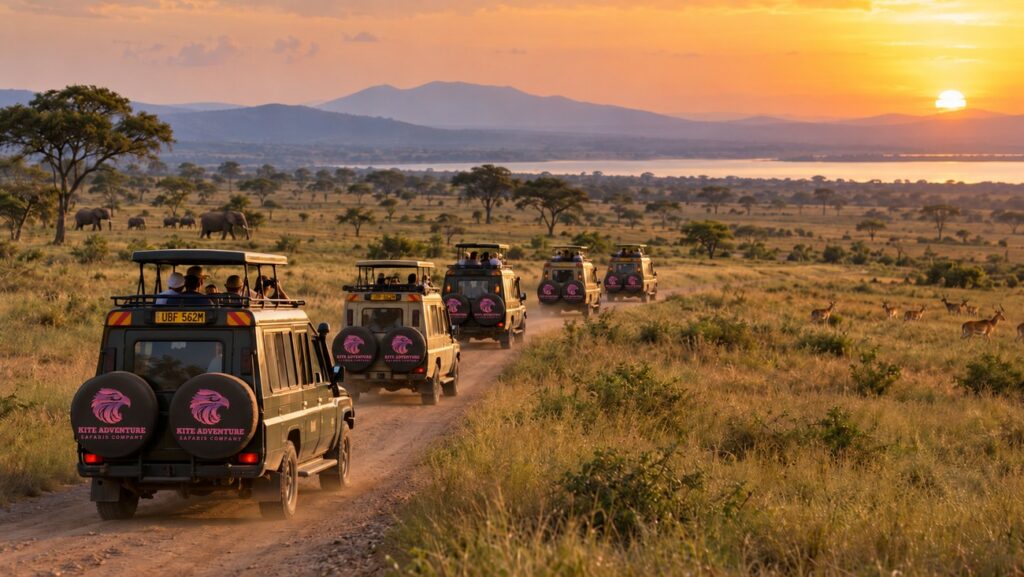
A useful first enquiry explains what the school hopes to achieve and which conditions must be met before planning can progress. The immediate question is not simply which safari to book, but whether the proposed travel could work for this particular group.
Identify the lead adult organiser and explain where the school is in its decision-making process. A preliminary idea, a proposal awaiting leadership approval and a trip with agreed dates require different levels of detail. Make clear whether you need an initial feasibility response or information for a formal internal review.
Separate essential conditions from preferences
Essential conditions might include a fixed return date, a school-approved rooming arrangement or a limit on time spent travelling each day. Preferences might include a particular wildlife interest or time for pupil reflection. Label these separately so an attractive suggestion is not mistaken for a suitable proposal.
If the school has a spending limit, state the currency and whether the figure covers the whole trip or only the arrangements being discussed. Do not assume that flights, insurance, permits or other costs form part of a proposal unless they are explicitly included.
Describe the learning objectives and preferred experiences
Explain the educational purpose in plain language. For example, the school may want pupils to practise field observation, discuss conservation decisions or explore the relationship between landscapes and livelihoods. These are proposed learning aims, not a promise of curriculum delivery or particular encounters.
Choose two or three priorities rather than listing every possible subject. State what pupils should be able to observe, discuss or produce afterwards. This helps distinguish experiences that support the visit from activities that merely fill the schedule.
Keep teaching responsibilities clear
Say whether teachers intend to prepare worksheets, lead discussions or assess pupils’ work. If the school needs specialist interpretation, a subject-focused talk or time for structured study, ask whether this can be considered. Do not assume that a safari guide will provide teaching, assessment or a curriculum-linked programme.
For background reading, the school could review the published pages on birding in Murchison Falls or cultural village visits in Uganda. Use them to identify interests and questions, not as confirmation of suitability, access or availability for pupils.
Where community visits are of interest, explain the learning purpose and ask about permission, appropriate conduct and photography expectations. Avoid building a lesson around access to people, homes or institutions before participation has been agreed.
Provide dates, pupil age ranges and group numbers
Give the proposed travel window, preferred trip length and any flexibility. Distinguish the total time available away from school from the time available for activities in Uganda. Include any fixed examination dates, term commitments or return deadlines that affect the proposal.
Provide estimated pupil and adult numbers separately, along with pupil age ranges rather than names or dates of birth. If numbers may change, give a realistic range and explain when the school expects to confirm them. Age-related entry conditions and activity restrictions need checking before an experience is included.
Use a compact planning brief
The following checklist can support an initial enquiry without creating a pupil register. Where a decision has not been made, write “to be confirmed” rather than supplying an estimate that others may treat as final.
| Planning area | What to provide | What needs clarification |
|---|---|---|
| Educational purpose | Main learning aims and preferred themes | Whether proposed experiences could support them |
| Dates and duration | Travel window, flexibility and fixed deadlines | Whether a workable outline is possible |
| Group composition | Pupil age ranges and separate adult numbers | Relevant restrictions and group capacity |
| Supervision | School requirements and accompanying staff plan | Responsibilities during each part of the visit |
| Transport | Travel limits and functional access requirements | Vehicle arrangements and journey suitability |
| Accommodation and meals | Rooming conditions and dietary requirements in summary | Availability and ability to meet essential needs |
| Budget and approval | Budget scope and school decision deadlines | Inclusions, exclusions and terms before commitment |
Outline school-led supervision and safeguarding requirements
Describe the supervision arrangements the school proposes, including accompanying staff roles and any policies that affect the visit. Do not assume that guides, drivers or accommodation staff count towards the school’s required supervision. Any division of duties needs explicit discussion and written agreement.
Ask how responsibilities would be separated during transfers, activities, meals and overnight stays. The school should identify who would approve changes, manage pupil behaviour and make decisions if someone cannot continue with an activity.
Raise safeguarding conditions before route planning
If school approval depends on particular documentation, staff information, conduct standards or reporting procedures, identify those requirements early. Ask what information can be provided; do not assume that a required policy, check or qualification is already in place.
- Explain the school’s rules on adult contact with pupils and photography.
- Identify requirements for headcounts, handovers and overnight supervision.
- Ask how concerns, incidents and changes would be communicated.
- Clarify what the school must assess and approve independently.
Emergency planning also needs separate attention. Ask what arrangements would be proposed for illness, injury, separation from the group or disruption. The school should review these alongside its own procedures and insurance requirements, without assuming that medical support or emergency transport is included.
Identify transport, accommodation and meal requirements
Practical requirements can determine whether a proposal is viable before individual activities are considered. Set these out early, especially where a condition is essential for participation. A broad description such as “suitable for schools” is not a substitute for checking the actual arrangements.
Transport and daily pace
State any school limits on journey duration, travel after dark or the balance between travel and activities. Ask for proposed routes, realistic journey estimates and planned breaks when an outline becomes available. Do not build the school timetable around unconfirmed transfer times.
Request clarification of vehicle capacity, seating, seat belts, luggage space and how the group would be divided if more than one vehicle were proposed. Describe functional access needs without identifying individual pupils at this stage, and ask whether each relevant transfer and activity can meet them.
Accommodation and rooming
Explain the school’s room-sharing rules, staff proximity requirements and any restrictions on shared spaces. Ask for the proposed room configuration and relevant property information before judging suitability. No accommodation property, exclusive use arrangement or facility is confirmed by this enquiry page.
If the school requires particular bathroom arrangements, controlled access or space for an evening briefing, make that requirement explicit. Availability alone does not establish that a property meets the school’s conditions.
Meals, allergies and dietary needs
Give an anonymised summary of dietary requirements and distinguish preferences from needs that affect safety. Ask what meal arrangements could be offered and how questions about ingredients, preparation and cross-contact would be addressed. Do not assume that a dietary request can be met until the relevant arrangements have been checked.
Also ask how drinking water, meal timing and food during transfers would be handled. Any necessary individual health information should follow later through an agreed, appropriate process rather than an open initial enquiry.
Request written clarification before seeking final approval
If the initial discussion suggests a possible fit, request a written proposal that separates confirmed details from items still under review. The school needs to see not only what is suggested, but also what is excluded and who is responsible for each part of the visit.
A published tour such as the 7 Days Uganda Wildlife Safari may provide background for discussion. It should not be treated as a school itinerary or evidence that its pace, activities and arrangements suit your pupils.
- Ask which dates, activities and arrangements remain subject to availability.
- Request clear inclusions, exclusions and any proposed additional costs.
- Clarify school responsibilities and any proposed provider responsibilities.
- Ask about payment, cancellation and change terms before commitment.
- Identify documents needed for the school’s own review and approval.
Resolve essential conditions before presenting a proposal as ready to book. If a requirement cannot be confirmed, record it as unresolved rather than treating silence as agreement.
Send a non-sensitive initial group brief
Keep the first message focused on feasibility. Include the school’s learning priorities, travel window, estimated pupil and adult numbers, age ranges, budget scope and essential practical conditions. Add the organiser’s professional contact details and the date by which an initial response would be useful.
Do not include pupil names, passport copies, medical records, safeguarding case details or emergency contact lists. If individual information becomes necessary later, first establish why it is needed, who should receive it and how it should be shared.
Share this non-sensitive brief with Kite Adventure Safaris Company and ask whether the school’s requirements can be considered. Request clarification of any limitations before progressing: an enquiry is an invitation to assess feasibility, not acceptance of the group or confirmation of travel arrangements.
TopicEducational group safari enquiries
Reader focusCommercial enquiry: establish whether a Uganda safari could accommodate a school group's educational aims and practical requirements.
Main subjectUganda school group safari